How To Create A Cruise First Aid Kit With Checklist

DISCLOSURE: Stylish Cruising contains affiliate links and is a member of the Amazon Services LLC Associates Program, as well as affiliate programs with other companies. If you make a purchase using one of these links, we may receive compensation at no extra cost to you. To learn more, please see our Privacy Policy.
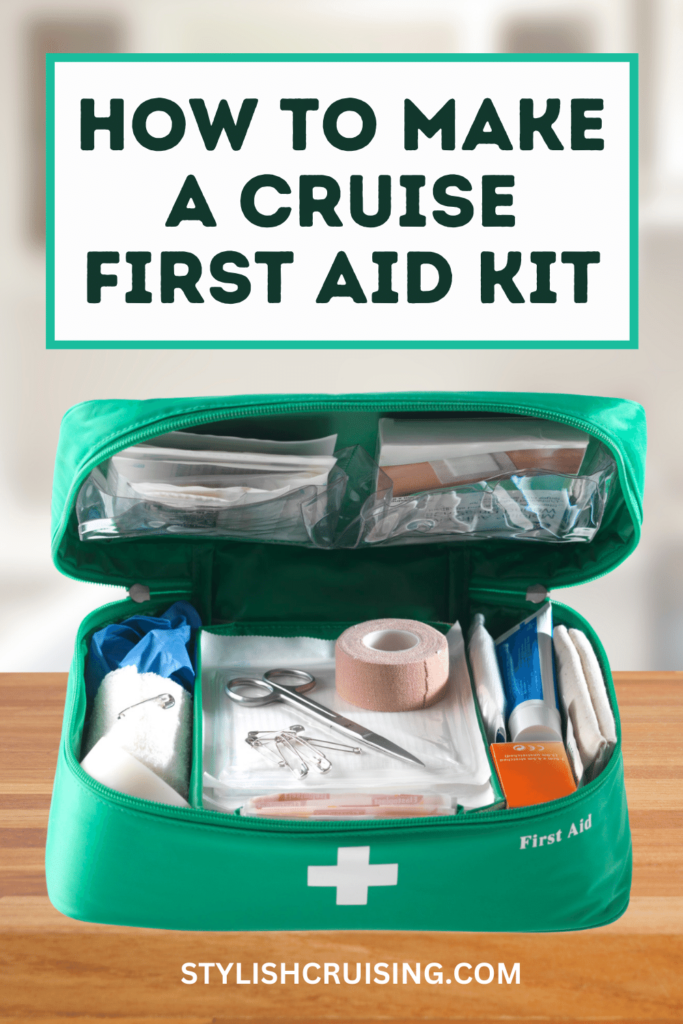
When we plan a cruise vacation, we often worry about packing the right clothes, shoes, and accessories. We usually forget one essential item that could make a significant difference, especially during an emergency – a first aid kit.
A first aid kit is something that we should have on every trip, but it’s particularly crucial on a cruise, where medical help may be very expensive for minor issues that you can easily handle yourself with the right tools. In this post, we will tell you how to create a cruise first aid kit, so that you can be prepared for any minor health-related situation on your next vacation, cruise or otherwise.
Although cruise ships have a fully equipped medical center that can provide necessary medical care, it’s always smart to be prepared for handling non-emergency health issues yourself.
For more information on what to do if you get sick on a cruise ship, check out this post.

Our Cruise First Aid Checklist
Download your copy of our Cruise First Aid Kit Checklist.
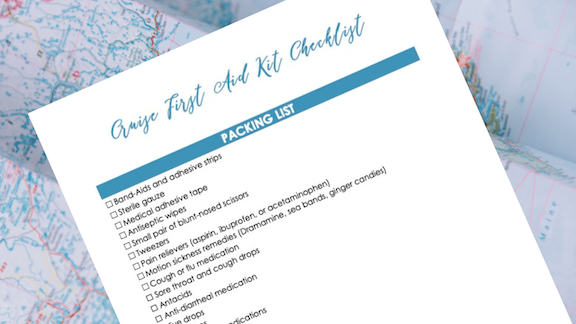
Cruise First Aid Kit Checklist
Would you like a checklist to help you put together your own cruise first aid kit? Our exclusive handout lists helpful items you might need for your own kit.
Basic Supplies
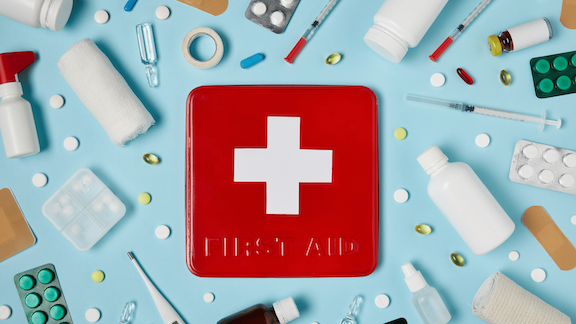
Every first aid kit should have some basic essentials like Band-Aids, adhesive tape, gauze, tweezers, and scissors. These items can help you treat cuts, bruises, and minor burns.
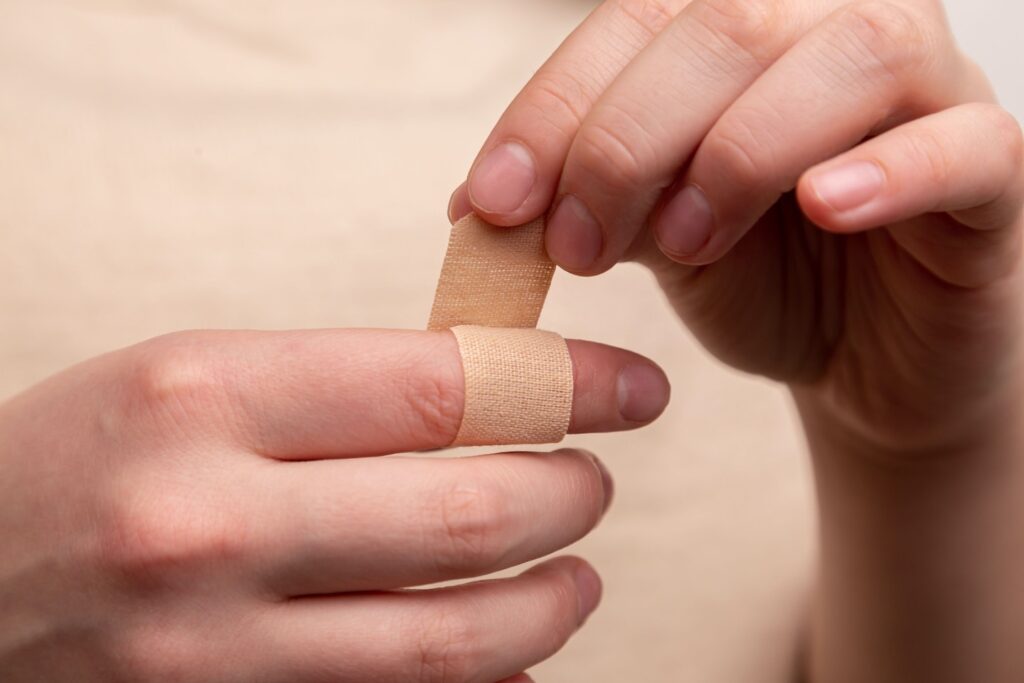
- Bandages and Adhesive Strips: Various sizes for covering wounds and cuts. About 10 to 15 should do.
- Sterile Gauze and Tape: To dress larger wounds and control bleeding. Two rolls of gauze and one roll of medical adhesive tape are recommended.
- Antiseptic Wipes or Solution: For cleaning wounds and preventing infection.
- Antiseptic Ointment: For preventing infection in cuts or burns while healing. Neosporin and cortisone cream are helpful.
- Scissors and Tweezers: A small pair of scissors are useful for cutting bandages, and tweezers for removing splinters.
Medications
Pack all the medications you usually take, and also carry extra medications that could come in handy during a cruise. Some suggestions are:
- Pain Relievers: Aspirin, ibuprofen, or acetaminophen for headaches and pain relief.
- Motion Sickness Remedies: Especially if you’re prone to seasickness. Dramamine, sea bands, and ginger candies can help. Suggestions for natural remedies can be found here.
- Cough, Sore Throat, and Flu Remedies: Cough or flu medication, and sore throat and cough drops.
- Antihistamines: For allergies and mild allergic reactions.
- Digestive Aids: Antacids and anti-diarrheal medications.
- Eye Drops: For dry, scratchy eyes.
- Ear Drops: For earaches. Essential when you travel with small children.
- Prescription Medications: Carry a sufficient supply if you have regular prescriptions.
Sun Care and Insect Repellent
Cruises often include days at sea or stops at tropical destinations. It’s essential to carry essentials like sunscreen, sunglasses, aloe vera gel, and insect repellent. Sunburns can be a vacation spoiler, and it’s always better to be prepared.
- Sunscreen: Cruises often involve sun exposure, so pack a high SPF sunscreen.
- Aloe Vera Gel: In case you miss a spot with your sunscreen.
- Lip Balm with SPF: Protect your lips from sun and wind exposure.
- Insect Repellent: Depending on your cruise destination.
Personal Health Items
Along with the above items, ensure that you pack essentials like hand sanitizer and wet wipes. These items can help you maintain hygiene and keep germs at bay.
- Hand Sanitizer: Maintain good hand hygiene, especially before eating.
- Wet Wipes: Handy for cleaning surfaces as well as hands.
Medical Tools
Other helpful items to include are:
- Thermometer: To monitor your temperature in case of illness.
- Disposable Gloves: Useful for providing first aid to others and maintaining hygiene.
- Instant Cold Packs: Relieve swelling and pain in case of injuries.
Emergency Information
It’s helpful to keep all your emergency information handy while you travel. This can include:
- Emergency Contact List: Include contact details for family and friends.
- Health Insurance Card: Ensure it’s valid and covers cruise-related incidents.
- Travel Insurance Info: Keep a copy of your policy and company’s contact info.
- Copy of Itinerary: Useful for medical professionals in case of evacuation.
First Aid Manual
A simple guide can be invaluable in emergencies.
How To Put Together Your First Aid Kit
You don’t want to carry full-size bottles of over-the-counter medications, so sort out your pills and capsules into handy bags like these that you can personalize.
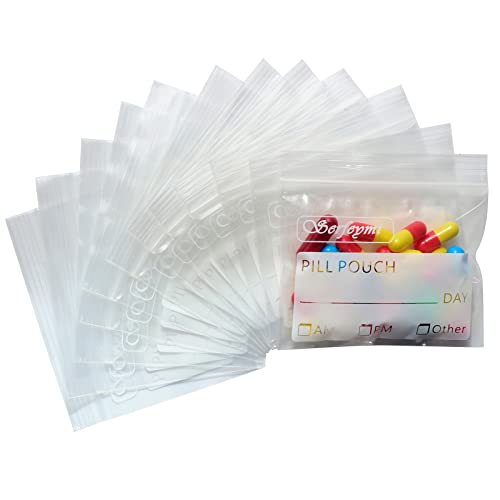
Travel Pill Pouch Bags
Putting together your travel medical kit is easy with these plastic Ziploc bags for your medications that you can personalize. Pack of 120.
An alternative to the above is containers with identifying stickers such as these:

Travel Pill Organizers Set
This set of four plastic pill organizers help you organize your prescription and non-prescription medications with ease. A set of labeling stickers is included.
Lastly, a waterproof container is useful for keeping your first aid supplies organized and protected from water exposure. A simple Tupperware type of container will work well.
Prefilled First Aid And Medical Kits
If you feel it is too much trouble or expensive to put together your own first aid and medical kit, you can always purchase something like the two below, one for first aid and the other for common travel medications.
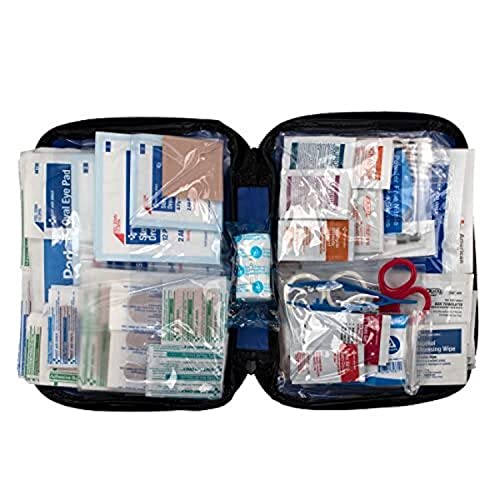
Travel First Aid Kit
Going to the cruise ship’s medical clinic can be expensive, so keep common first-aid items with you. This travel first aid kit won’t take up much room at all in your bag.

Travel Medications Kit
Going to the cruise ship’s medical clinic can be expensive, so keep common over-the-counter remedies with you. This travel kit includes Medi-Lyte, Ibuprofen, Antacid, Mediproxen, Medi-Meclizine, Loradamed, and Sinus Decongestant.
Personalized Items
Just in case, you should bring on your cruise:
- Prescription Glasses or Contacts: An extra pair can be handy.
- Personal Medication List: Include information on allergies and emergency contacts.
- Medical ID Bracelet: Especially important for individuals with specific health conditions.
Final Thoughts On How To Create A Cruise First Aid Kit
Creating a cruise first aid kit might seem like a tedious task, but it can make a significant difference during a medical emergency. We recommend creating a checklist and packing all the essential items mentioned above. These items can provide quick relief and help you carry on with your vacation with ease.
It’s always better to be prepared and enjoy your cruise vacation to the fullest. A well-prepared first aid kit can provide peace of mind and ensure that you have a safe and healthy vacation experience. Plus, it can save you money from having to go to the cruise ship’s medical center for minor issues.
Safe sailing!

LET’S BE SOCIAL: Follow us on Facebook, Instagram, Pinterest, and YouTube.
Planning to book a cruise? We have some tips for you.