
How To Book A Cruise For The First Time

DISCLOSURE: Stylish Cruising contains affiliate links and is a member of the Amazon Services LLC Associates Program, as well as affiliate programs with other companies. If you make a purchase using one of these links, we may receive compensation at no extra cost to you. To learn more, please see our Privacy Policy.
Before booking your first cruise, there are many things to consider that will affect your final decision. We’ve broken down for you how to book a cruise for the first time.
Going on a cruise can be an exciting and fun-filled adventure, but it’s important to do your research before booking your trip. With so many cruise lines, ships, and itineraries available, it can be overwhelming to choose the right one for you. Let’s discuss some key things you should know before booking a cruise that might help you narrow down your choices.


How you can book your cruise
If this is your first or second cruise, or if you haven’t traveled much, using a travel agent to book your cruise can give you peace of mind. They can also help you through the decision process, as they should know the cruise lines well. Some may be able to offer you extra benefits, such as additional onboard credit or dinner at a specialty restaurant.
Of course, you can also book directly with the cruise line you choose, especially if you have experience with cruising.
Who will be cruising
Are you a family traveling with children, traveling as a couple, or are you traveling solo? This will factor into what cruise line you choose. Let’s break it down by the major cruise lines.
Families: If you’re traveling as a family, you might enjoy Carnival, Disney, Norwegian, or Royal Caribbean. All have kids’ programs, as well as plenty of fun activities to keep your child entertained.
Couples: If you’re traveling as a couple and want a more adult atmosphere, you might enjoy Celebrity, Holland America, MSC Cruises, Norwegian, Oceania, Regent Seven Seas, Silversea, Viking Ocean Cruises, or Virgin Voyages.
Solo Travelers: If you’re traveling alone, you’ll want a cruise line that offers solo cabins or doesn’t charge a solo supplement. Consider Norwegian, Royal Caribbean, Silversea, or Virgin Voyages.
Budget
Cruises can vary greatly in price, so it’s important to determine your budget before you start thinking about booking your first cruise. Take into account the cost of the cruise itself, as well as any additional expenses like airfare, transportation to and from the port, gratuities, excursions, and onboard activities.
Check out our cruise budgeting form or spreadsheets to help you consider all potential costs.
Pro Tip: Cruises often offer promotions and deals, so it’s worth shopping around to find the best price.
Budget: If you’re traveling on a budget, you might want to consider Carnival. Although they are now raising their prices, they often offer the least expensive cruises in the industry.
Mainstream: Mainstream cruise lines like Norwegian, Royal Caribbean, or Virgin Voyages offer a wide variety of staterooms to suit many budgets.
Premium: Premium cruise lines that offer a suite program such as Celebrity, Disney, Holland America, MSC Cruises, Norwegian, or Viking.
Luxury: If you want an overall luxury experience, choose Oceania, Regent Seven Seas, or Silversea.
Cruise line and ship
Cruise ships come in all sizes, so it’s important to choose one that fits your preferences. Think about the amenities you want, such as restaurants, bars, swimming pools, onboard activities, and fitness centers. Consider the size of the ship and the number of passengers it can accommodate. Do you want a large ship with lots of onboard activities or a smaller ship with a more intimate atmosphere?
Take our cruise line quiz!
The mainstream cruise lines such as Celebrity, Norwegian, and Royal Caribbean offer the widest selection of ships of varying sizes.

All-inclusive cruising
If you want an alcoholic beverage package, consider a cruise line that offers an all-inclusive option that covers the beverage package, Wi-Fi, and gratuities. Celebrity’s All-Inclusive and Norwegian’s Free at Sea are two such packages.
Port of departure
Where do you want to cruise from? If you live in the United States and want to keep the price of airfare low, you might want to choose a cruise line that sails from your area of the country. However, limiting yourself to a particular port also limits the destinations you can choose from.
Northeast: In the Northeast, cruises leave from Baltimore, Boston, and New York City. These cruises are usually to Canada and New England, Bermuda, longer cruises to the Caribbean, and transatlantic cruises to Europe.
Northwest: In the Northwest, cruises leave from Seattle (and from Vancouver, BC in Canada). These cruises are usually to Alaska, transpacific to Asia or Hawaii, or along the Pacific Coast.
Southwest: In the Southwest, cruises leave from Los Angeles and San Diego. These are usually either Mexican Riviera or Pacific Coast cruises.
South: In the South, cruises leave from Charleston, Fort Lauderdale, Galveston, Miami, New Orleans, Port Canaveral, and Tampa. These cruises are usually to the Caribbean or Europe.
A transatlantic or transpacific cruise may be less expensive per day than other cruises, but you’ll need to factor in your travel costs to or from the United States one way, plus hotel costs either before or after the cruise.
If your budget is higher, you might consider a Mediterranean cruise that sails from Barcelona or Rome, or a Scandinavian cruise that sails from Amsterdam. The sky is the limit!

When and where to cruise
Some itineraries are offered year-round, like Caribbean cruises, and others have shorter seasons, such as Alaska cruises. Pricing for these itineraries varies according to whether it’s prime vacation season (when kids are out of school) or when the weather is optimal for that locale (such as June or July in Alaska).
If you’re cruising to Alaska, for instance, the shoulder months of May and September will be the coolest, and therefore the least expensive times to travel. Or if you want to see the fall leaves in Canada and New England, the most popular times to travel will be September and early October.
Cruise itineraries include:
- Alaska
- Antarctica
- Asia
- Bahamas
- Bermuda
- Canada and New England
- Caribbean
- Hawaii
- Mediterranean
- Mexico
- Northern Europe
- Pacific Northwest
- Panama Canal
- South America
- South Pacific
- Transatlantic
- Transpacific
Cabin type and location
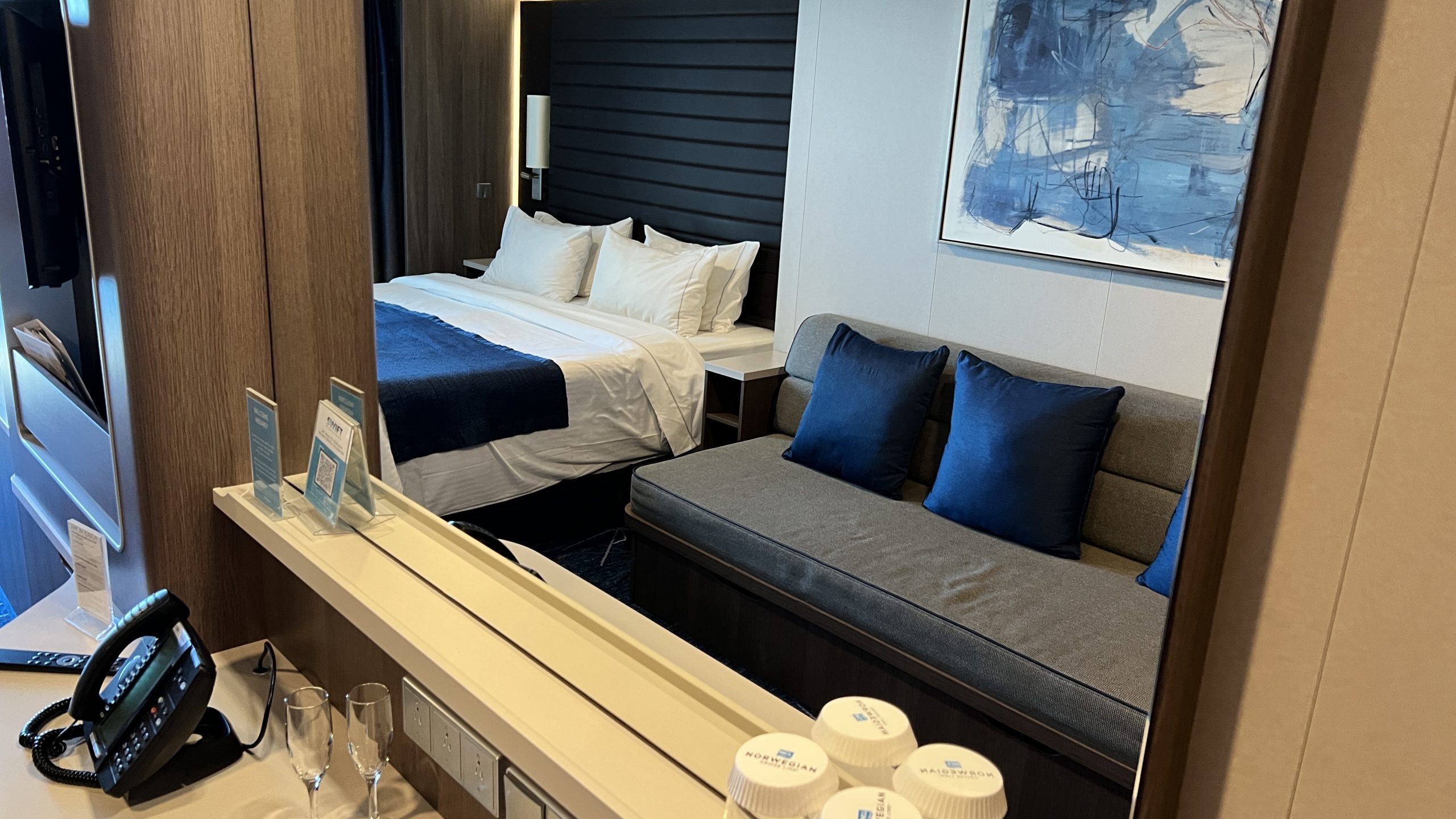
Cruise ships offer a variety of cabin types, from interior cabins with no windows to spacious suites with balconies. Consider how much time you’ll be spending in your cabin and what amenities you want. If you plan to spend most of your time exploring the ship and participating in onboard activities, a smaller cabin may be fine for you. However, if you want a more luxurious experience or plan to spend a lot of time in your cabin, consider upgrading to a suite or balcony room.
Pro Tip: Once you’ve narrowed down which cabin you might want, check the ship’s deck plans to see what is both above and below your cabin. If a large public area such as the pool deck or buffet or a nightclub is above or below your cabin, you might want to choose another to avoid excessive noise.
If you or someone traveling with you is prone to motion sickness, consider a cabin on a lower deck and mid-ship. These cabins experience the least motion during rough seas.
You can also check for reviews on particular cabin categories, such as the ones for Celebrity and Norwegian that we have available for cabins that we have actually stayed in.
Onboard activities
Cruise ships offer a wide range of onboard activities, from live entertainment to spa treatments to fitness classes to rock-climbing walls. Research the activities offered on your chosen cruise to make sure they align with your interests. Consider any additional costs for these activities and book in advance if necessary, as some activities may have limited availability.
Dining options
Most cruise ships offer a variety of dining options, from formal dining rooms to casual buffets to specialty restaurants. Consider what type of dining experience you want and any dietary restrictions you have. A few cruise lines offer all-inclusive dining, while others charge extra for specialty restaurants.

Travel documentation
Make sure you have the proper documentation for your cruise. Depending on your itinerary, you may need a passport or visa. About six months before your cruise, check the requirements for each port of call and ensure that your documentation for each passenger is up-to-date and valid, good for at least six months after the end of the cruise you are planning to book. Don’t wait until the last minute, or you might risk missing out on your vacation.
Dress Code
Some cruise lines like Cunard have a stricter dress code than other lines, requiring formal wear in the evening. Mass market and premium cruise lines can be more relaxed, but at a minimum, they will require long pants and closed-toe shoes in the main dining rooms and specialty restaurants. Check your selected cruise line’s dress code so that you aren’t surprised. Here is information on Celebrity and Norwegian’s dress codes to give you an idea.
Other things to keep In mind
What we’ve discussed so far are the larger decisions to be made before booking your first cruise. Now let’s go over the finer points.
Cruise Insurance
Consider purchasing cruise insurance before you book your cruise to protect yourself in case of unforeseen events such as trip cancellation, medical emergencies, or lost or stolen baggage.
Health and safety protocols
Check the cruise line’s health and safety protocols, including vaccination and testing requirements.
Payment and cancellation policies
Understand the cruise line’s payment and cancellation policies, including deadlines for final payment and any penalties for canceling or changing your reservation.
Pre- and post-cruise arrangements
Consider any pre- or post-cruise arrangements, such as flights, hotels, and transportation to and from the port.
Final thoughts on How To Book A Cruise For The First Time
Before booking your first cruise, it’s important to consider your budget, the itinerary, the ship, cabin options, onboard activities, dining options, and passport and visa requirements. Doing your research ahead of time and choosing the right cruise can help ensure that you have an enjoyable and memorable vacation.
It may seem like a lot of homework, but once you have a few cruises under your belt, these steps will become second nature as you’re booking your next cruise.
For more detailed information on each subject above, check out our page on Planning A Cruise, which lists each subject we have written about to help guide you in your cruise planning journey.
Happy cruising!

LET’S BE SOCIAL: Follow us on Facebook, Instagram, Pinterest, and YouTube.
Planning to book a cruise? We have some tips for you.