
How To Travel Well: Choosing A Cruise

DISCLOSURE: Stylish Cruising contains affiliate links and is a member of the Amazon Services LLC Associates Program, as well as affiliate programs with other companies. If you make a purchase using one of these links, we may receive compensation at no extra cost to you. To learn more, please see our Privacy Policy.
Choosing a cruise can be an exciting but sometimes challenging decision. There are so many choices to make and things to take into consideration.
What type of cruise line should you choose? Which ship? Which itinerary? How long should you cruise? Should you extend your vacation by staying an extra day or two before or after the cruise to explore the port?
Here are some steps to help you choose the best cruise for your next adventure.


Identify Your Interests
Identifying your interests is a crucial step when it comes to choosing the perfect cruise experience. Your travel choices should align with your preferences to ensure you have an enjoyable and memorable journey.
Destination Preferences: Begin by considering the destinations that interest you the most. Are you drawn to tropical paradises like the Caribbean, cultural hubs in Europe, or breathtaking landscapes in Alaska? The destinations you choose will shape your entire cruise experience, so take some time to explore the ports of call and activities available in each region.
Activities and Entertainment: Think about the activities and entertainment you enjoy. Do you long for adventurous excursions like snorkeling, hiking, or zip-lining? Or perhaps you prefer more relaxed pursuits such as spa treatments, wine tastings, or cooking classes? Look for cruise lines that offer a range of activities that align with your interests.
Onboard Ambiance: The onboard atmosphere varies between cruise lines. Some emphasize a more laid-back and relaxed vibe, perfect for those seeking tranquility. Others focus on vibrant nightlife, offering Broadway-style shows, casinos, and nightclubs. Consider the type of ambiance that resonates with you to ensure a comfortable and enjoyable stay on the ship.
Culinary Delights: Food enthusiasts will want to explore the culinary offerings of different cruise lines. Are you excited about gourmet dining experiences with a focus on fine dining and international cuisine? Or do you prefer a more casual approach with diverse buffets and comfort food options? Research the dining options and specialty restaurants each cruise line offers.
Accommodation Preferences: Your onboard accommodations play a significant role in your cruise experience. If you value luxury and spaciousness, premium suites might be your preference. On the other hand, if you plan to spend most of your time exploring the destinations, a comfortable stateroom might suffice. Consider the cabin types and amenities offered by various cruise lines.
Travel Style: Reflect on your travel style. Are you more drawn to a refined and upscale experience that aligns with the premium cruising offered by Celebrity Cruises, Holland America, or Princess? Or do you prefer a more relaxed and informal atmosphere such as that offered by Norwegian Cruise Line, Royal Caribbean, or Carnival Cruise Line? Understanding your travel style will help you narrow down your options.

Set A Budget
Creating a budget is a crucial step in the process of selecting a cruise that aligns with both your preferences and financial considerations.
Upfront Costs: Begin by considering the upfront costs of the cruise itself. This includes the base fare for the cabin, which can vary depending on factors such as the cruise line, ship, itinerary, and cabin category. Keep in mind that cruise lines like Celebrity Cruises, Norwegian Cruise Line, and MSC Cruises often offer a range of cabin options, from standard staterooms to luxurious suites.
Inclusions and Add-Ons: Take a closer look at what is included in the base fare. Some cruise lines include meals, non-alcoholic beverages, and basic entertainment in their pricing. However, premium experiences, specialty dining, alcoholic beverages, shore excursions, and spa treatments may come at an additional cost. Make a list of the extras you might want to indulge in and factor them into your budget.
Gratuities and Service Charges: Many cruise lines have mandatory gratuities or service charges that cover onboard staff and service. These charges can add up over the course of the cruise. It is essential to include these expenses in your budget planning to avoid any surprises.
Transportation and Pre-Cruise Expenses: Don’t forget to factor in transportation costs to and from the embarkation and disembarkation ports. Whether you’re flying or driving, these expenses can vary significantly depending on your location. Additionally, consider pre-cruise expenses such as hotel stays and meals before boarding the ship, or if you decide to extend your vacation on land at your disembarkation port.
Onboard Activities and Souvenirs: Allocate funds for onboard activities and souvenirs. Whether you’re interested in spa treatments, specialty dining, or shopping for mementos, having a budget in place will help you manage your spending during the cruise.
Port Expenses: Some ports might have entry fees or local taxes that passengers need to pay. Do a mock booking (which means going through most of the reservation process online without actually booking the cruise) of the cruises that are on your shortlist to research these potential expenses in advance to avoid any surprises.
Emergency Fund: It is wise to set aside a portion of your budget as an emergency fund. Unexpected situations can arise, and having a financial safety net ensures you are prepared to handle any unforeseen expenses.
Promotions and Deals: Keep an eye out for promotions and deals offered by the cruise lines. Sometimes you can find special offers that include onboard credits, free upgrades, or discounted fares. Taking advantage of these deals can help you make the most of your budget.
Payment Plans and Timing: Some cruise lines offer payment plans that allow you to spread out the cost of your cruise over time. Consider the timing of your payments and choose an option that suits your financial situation.
By carefully considering these aspects and creating a comprehensive budget, you’ll be well-equipped to choose a cruise that not only fits your preferences but also aligns with your financial comfort zone.
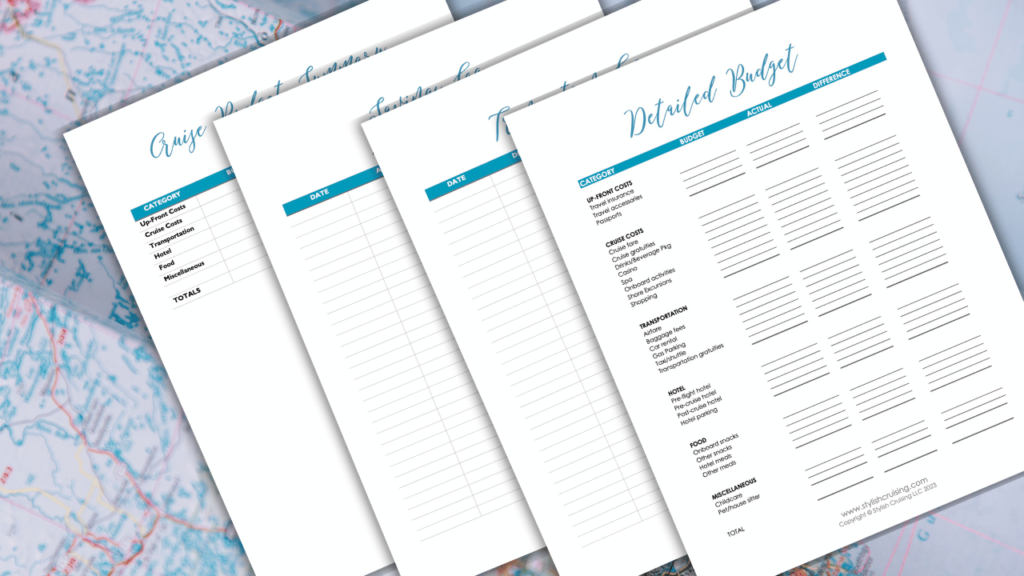
Need help creating your budget? Our Cruise Budget Planner can help you with all the options you need to consider.
Choosing A Cruise Duration
The length of the cruise is another important factor to consider. Are you looking for a short getaway or a longer voyage that allows you to fully immerse yourself in the destination? Be sure to check the itineraries and duration of cruises available to match your vacation time frame.
Short Getaways (2-5 Days): Short cruises are perfect for those seeking a quick escape from their routine. These cruises are often ideal for first-time cruisers, families, or individuals with limited time. They are a great way to experience the cruise lifestyle without committing to a longer journey. However, keep in mind that shorter cruises might have a more condensed itinerary and fewer onboard amenities compared to longer voyages.
Week-long Adventures (6-9 Days): Week-long cruises strike a balance between offering a diverse range of destinations and onboard experiences while remaining manageable in terms of time commitment. They provide an opportunity to explore multiple ports, indulge in various activities, and truly immerse yourself in the cruise experience. This duration is popular among a wide range of travelers, from couples to multi-generational families.
Extended Explorations (10+ Days): If you are looking for a more immersive experience and have the luxury of time, extended cruises are a fantastic option. These voyages allow you to delve deeper into the destinations, fully unwind, and take advantage of onboard amenities. Longer cruises often attract seasoned travelers who want to truly relax and discover each destination’s hidden gems.
Consider Your Schedule: When choosing a cruise duration, consider your work schedule, family commitments, and any other obligations. Assess how much time you can realistically allocate to your vacation. While longer cruises offer more comprehensive experiences, shorter cruises can be equally fulfilling and manageable for those with tight schedules.
Port Intensity: The number of ports and the time spent in each port can vary based on the cruise duration. Longer cruises might allow for a more leisurely exploration of each destination, while shorter cruises might have fewer ports with limited time in each. Consider your desire to explore ports in-depth versus covering more ground. Also, keep in mind that a port-intensive cruise with few sea days can be exhausting if you go on a long excursion in every port. While onboard, be sure to give yourself time to recharge.
Onboard Activities and Relaxation: Longer cruises often have a wider range of onboard activities and entertainment options, providing ample opportunities for relaxation and recreation. If you’re someone who enjoys spending time on the ship and engaging in various activities, a longer cruise might be more appealing.
Itinerary Variety: Longer cruises often offer more diverse itineraries, including transoceanic crossings, remote destinations, and multiple regions. If you’re looking for a unique and comprehensive experience, an extended cruise might be the right choice.
Budget Considerations: Remember that longer cruises generally involve higher costs due to the extended duration. Be sure to factor in the additional expenses associated with a longer cruise, including accommodations, meals, and activities.
Personal Preferences: Ultimately, your personal preferences play a significant role in choosing the right cruise duration. Reflect on whether you prefer a fast-paced adventure or a leisurely exploration, and select the duration that resonates with your travel style.
Researching Cruise Lines And Itineraries
Researching cruise lines and itineraries is a crucial step in finding the perfect cruise that aligns with your preferences and travel goals.
Identify Your Priorities: Before delving into specific cruise lines and itineraries, outline your priorities. Are you seeking a luxury experience, family-friendly activities, adventurous excursions, or cultural immersion? Knowing your priorities will help you narrow down your options.
Explore Cruise Line Options: Take time to research different cruise lines. Visit their official websites to learn about their onboard amenities, dining options, cabin categories, entertainment, and more. Pay attention to the cruise line’s reputation, reviews, and awards to gauge the quality of their services.
Consider Itinerary Choices: Think about the destinations you’ve always wanted to visit. Cruise itineraries can vary significantly, ranging from tropical paradises to historical cities. Research the ports of call, activities, and shore excursions offered in each itinerary to ensure they align with your interests.
Read Reviews and Feedback: Online reviews and forums are invaluable resources for getting insights from fellow cruisers. Read reviews on travel websites, forums, and social media platforms to get a sense of what passengers have experienced on specific cruise lines and itineraries.
Consult Travel Agents: Travel agents who specialize in cruises can provide expert guidance based on your preferences. They have firsthand knowledge of various cruise lines and itineraries, and they can help you find deals and promotions that match your needs.
Consider Onboard Amenities: Different cruise lines offer varying onboard amenities, from spa treatments and fitness centers to specialty restaurants and entertainment options. Research the amenities that matter most to you and choose a cruise line that aligns with your preferences.
Review Cabin Options: The type of cabin you choose can greatly impact your cruise experience. Research the available cabin categories, sizes, views, and amenities to ensure your comfort throughout the journey.
Check Departure Ports: Consider the departure port’s accessibility and proximity to your location. Choosing a departure port that is convenient can simplify your travel logistics.
Compare Prices and Inclusions: Compare the pricing of different cruise lines and itineraries. Ensure that you’re comparing apples to apples by considering what is included in the fare. Some cruise lines, such as Norwegian Cruise Line, might offer more inclusive packages that cover gratuities, beverages, and even Wi-Fi.
Theme Cruises and Special Events: Some cruise lines offer theme cruises centered around specific interests like food, music, wellness, or even pop culture. Research if any of these special events align with your passions.
Flexibility with Dates: If you are open to flexible travel dates, explore cruise line websites for promotions, deals, and discounts available during certain times of the year.
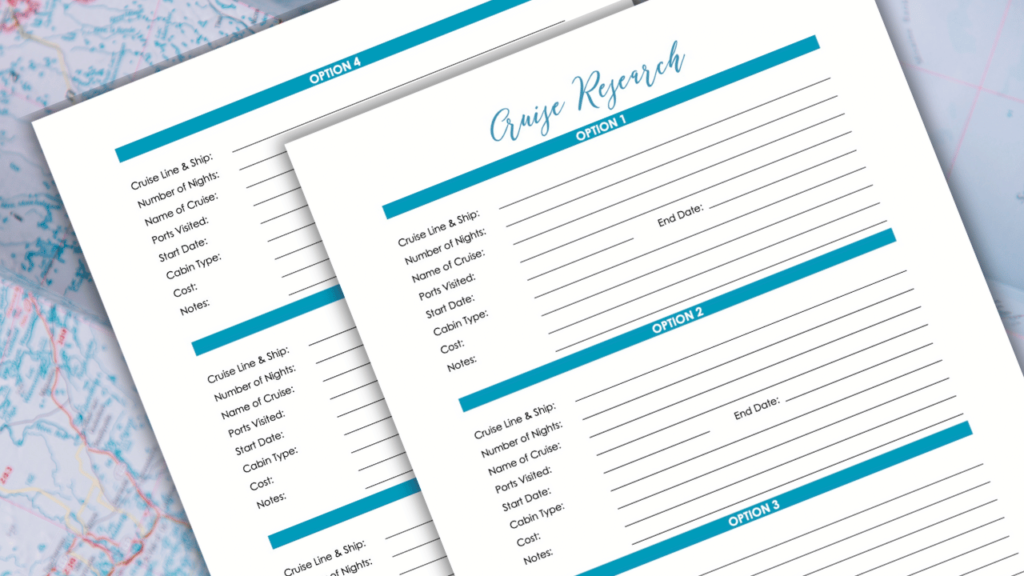
Our post on classes of cruise lines could help you narrow down that choice. And to help keep your cruise research organized, try our Cruise Research Form.
Consider The Time Of the Year
Different destinations have varying peak seasons and weather patterns. Take into account the time of year you plan to travel and how it might affect your chosen destination’s attractions and weather conditions.
Peak vs. Off-Peak Seasons: Just like any travel destination, cruises have peak and off-peak seasons. Peak seasons, often aligning with school breaks and holidays, can be busier and more expensive. Off-peak seasons offer fewer crowds and potential cost savings. Consider your preferences for a quieter experience versus a livelier atmosphere.
Weather and Climate: Research the climate of your desired cruise destination during different times of the year. Do you prefer sunny and warm weather for beach activities, or are you interested in cooler temperatures for comfortable sightseeing? Understanding the seasonal weather patterns will help you plan your cruise around your desired activities.
Hurricane and Monsoon Seasons: Some cruise destinations, especially in the Caribbean and Southeast Asia, have hurricane or monsoon seasons. It is essential to be aware of these weather patterns and avoid cruising during these periods to ensure a smoother and safer journey.
Alaska and Antarctica Cruises: If you are considering cruising to Alaska or Antarctica, keep in mind that these destinations have specific cruising seasons due to their extreme climates. Alaska cruises typically run from May to September, while Antarctica cruises are available during the Southern Hemisphere’s summer months from November to March.
Cultural and Festive Events: Research if there are any local festivals, holidays, or special events happening at your cruise destination during certain times of the year. Participating in these events can provide a unique cultural experience and enhance your overall journey.
Wildlife Viewing: If your cruise involves wildlife viewing, such as whale watching or observing marine life, be sure to choose a time of year that aligns with the animals’ migration or breeding patterns. This will increase your chances of encountering these majestic creatures.
School Holidays and Family Travel: If you are traveling with children, consider school holidays and breaks when planning your cruise. Cruising during these times can offer a family-friendly atmosphere with a range of activities catering to young passengers. Conversely, if you prefer to travel on a cruise that has fewer children, avoid booking during school holidays and breaks, and choose longer itineraries.
Budget Considerations: Prices for cruises can vary significantly depending on the time of year. Peak seasons and holiday periods often come with higher costs. If you are looking for a budget-friendly option, consider cruising during the off-peak or shoulder seasons.
Availability and Reservations: Keep in mind that popular times of the year can lead to limited availability, especially for specific cabin categories or itineraries. If you have a specific cruise in mind, it is smart to book well in advance to secure your preferred dates.
Personal Preferences: Your personal preferences play a crucial role in deciding the time of year for your cruise. Whether you are seeking a festive atmosphere, tranquil surroundings, or specific activities, make sure to choose a time that aligns with your desires.
Tailoring the cruise’s timing to your interests and preferences will contribute to a memorable and fulfilling cruise experience.
Consult With Fellow Travelers
If you are traveling with friends or family, involve them in the decision-making process. Discuss everyone’s preferences and try to find a cruise line, ship, and destination that appeals to everyone.
Check Visa And Travel requirements
Make sure you understand the visa and travel requirements for your chosen destination, as some countries may require specific travel documents or vaccinations. Be sure that all travelers in your group have a passport that is valid until at least six months after the end of the cruise.
If you are traveling to Europe in 2025 and after, be aware that a new travel pass is planned to take effect sometime in 2025. This will require that travelers from the US will need to apply online for the pass, which will last for three years or until the expiration date of your current passport, and pay a small fee.
The process appears to be simple and quick but must be done prior to embarking for Europe. Cruise lines will be responsible for checking for ETIAS compliance at boarding, and will prevent anyone without a pass from boarding the ship.
Check with USA.gov for more information about visas, and ETIAS.com for information about the new travel pass to Europe.

Consider Embarkation Ports
Take into account the convenience of the embarkation port when choosing a cruise. Selecting a port close to your home or one that offers easy access to your desired destination can enhance your overall travel experience.
Many American cruisers prefer to stick with embarkation and debarkation ports in the US, rather than flying to Europe or another country to take a cruise. Choosing to cruise to Alaska, Mexico, the Caribbean, or Canada and New England saves a tremendous amount of money in travel expenses, and reduces your stress when you are new to cruising.
Once you are more seasoned at cruising, you will probably want to venture farther abroad to try new itineraries and see more exotic locales.

Are You Looking For A Bucket-List Cruise?
Based on my research, the top 10 bucket-list cruise destinations are as follows. Of course, your bucket list may be quite different, but these destinations are the most popular:
Alaska, USA: Cruise through the stunning landscapes of Alaska, witnessing glaciers, wildlife, and rugged coastlines.
Norwegian Fjords: Experience the breathtaking beauty of Norway’s fjords with their towering cliffs and serene waters.
Mediterranean: Explore the history and culture of various countries in the Mediterranean region, including Italy, Greece, Spain, and more.
Galapagos Islands: Discover the unique wildlife and pristine ecosystems of the Galapagos Islands, a UNESCO World Heritage site.
Caribbean: Enjoy the sun, sand, and crystal-clear waters of the Caribbean islands, each offering its own distinct charm.
Antarctica: Embark on an expedition cruise to the southernmost continent, witnessing the untouched wilderness and abundant wildlife.
French Polynesia: Experience paradise in the South Pacific, with destinations like Bora Bora, Tahiti, and Moorea.
Hawaii, USA: Cruise through the Hawaiian Islands, known for their stunning landscapes, volcanoes, and rich cultural heritage.
Southeast Asia: Explore the vibrant cities, ancient temples, and exotic cultures of countries like Vietnam, Thailand, and Malaysia.
Baltic Sea: Discover the historic cities and diverse cultures surrounding the Baltic Sea, including destinations like Stockholm, Helsinki, and Copenhagen.
These destinations offer a wide range of experiences, from nature and wildlife encounters to cultural immersion and historical sightseeing, making them popular choices for many travelers’ bucket-list cruises.
Follow Your Heart
Ultimately, choose a destination that excites you and your fellow travelers the most and aligns with your interests and desires. Do you all just want to relax and do a little snorkeling? Consider the Caribbean. Do you want to explore and learn about different cultures and history? Consider Europe.
Trust your instincts and go with the destination and itinerary that feels right for you.
Final Thoughts On Choosing A Cruise
By following these steps, you can narrow down your options and make an informed decision on your next cruise destination, ensuring you have an unforgettable and fulfilling travel experience.
Happy cruising!

LET’S BE SOCIAL: Follow us on Facebook, Instagram, Pinterest, and YouTube.
Planning to book a cruise? We have some tips for you.